Thursday, June 24, 2010

The Skills Needed Most for Career Success

1.Perseverance: We all face challenges. The average American will change jobs 8-9 times in their career. The true measure of a person’s worth is defined by their ability to overcome adversity.

“There is no education like adversity.”
- Benjamin Disraeli

2. Natural curiosity: the pursuit of lifelong learning is a critical attribute when times change with the degree of rapidity we are experiencing in today’s turbulent world. You should always be looking to increase your skills by pursuing accreditations and certifications, learning a new software program or another language. Curiosity manifests itself in being a voracious reader, and in general having a natural curiosity towards the way things work, and how people operate (being a closet sociologist.)

3. Playing politics: understanding how to navigate the turbulent waters of today’s workplace is critical for long-term survival and success. We’ve all heard ad nauseum that very little of our success can be contributed to the actual work. It’s how we play the “game” that matters. Even if you hate doing that, it is important your learn how to do it well.

4. Embrace change: adaptability is a key for success. Entire industries like banking and financial services, printing, publishing, retail and advertising are imploding.

5. Having a moral compass: it is especially critical for small business owners to realize that their personal values and belief system are synonymous with their organization culture. Being able to match your personal values to an organization’s is the most critical factor in ensuring one’s job satisfaction. An entire emerging industry is growing around the ideal of promoting the social good. In the age of Enron, Bernie Madoff, Goldman Sachs, AIG, Lehman Brothers, and BP, what you represent is fast becoming more relevant than the products or services you offer.

6. Social extrovert: being liked goes a very long way towards building broad social and professional networks. Do people gravitate towards you or literally run from you?

7. Established personal brand: have you asked yourself: “what do I really stand for?” What is your unique selling proposition? What are the three or four key characteristics that most clearly define who you are and what you hope to accomplish?

8. Lean into discomfort: There are things we are mortified of doing, like public speaking for example. Being able overcome our fears is an absolute must, in order to ensure success in today’s global contract workplace. Research indicates that as many as 25% of all American workers are now classified as independent / contract / consulting. With jobs becoming more difficult to find/keep, people will be forced into opportunities that require them to go at it alone.

"Inaction breeds doubt and fear. Action breeds confidence and courage. If you want to conquer fear, do not sit home and think about it. Go out and get busy."
- Dale Carnegie

Monday, June 21, 2010

The Top Five Reasons Your Business is Stuck.

And Why You Can’t Seem to Fix It.

In today’s challenging business climate, it is hard enough to maintain and even grow your business. But there are five areas that you have complete control over, which you are probably failing at. Following are the top five reasons that most organizations are stuck, and likely can't get themselves out of the current economic calamity.


5. Your personal problem-solving skills are outdated: You are attempting to navigate your way out of this business climate using the same old approaches that worked before but won'y any longer. We live in unchartered times. The challenges we face are unique, and can't be solved with yesterday's solutions. It’s not enough to lower prices, fix operations, or lay off staff. In a climate in which our business, political, educational, and financial institutions are all broken we simply CAN'T continue to pursue business-as-usual approaches.


4. You haven’t aligned your core business functions: Face it, you do not develop your sales, marketing, product development and customer care efforts in isolation of one another. Your management team continues to treat these as stand-alone, separate entities when in fact they are all intertwined and need to be planned and budgeted for as a single entity.

3. Your strategy is no longer relevant: You continue to implement a strategy that was developed at an earlier time before circumstances changed so drastically. Marketplace conditions such as the rate of technological change and globalization of business & industry are changing at such a rapid pace that strategies cannot be applied beyond 3 to 4 month cycles in most industries.

2. You don’t know your customers: You continue to sell to your existing customers without truly understanding the challenges they face. When was the last time you took a top revenue client out for breakfast? Do you periodically join your top clients for a ride along, to shadow them for a day to learn their business and challenges they face? Have you conducted a lifetime value assessment to determine your most (and least) profitable accounts? Do you have a strategy to grow repeat business with existing clients and covert your repeat customers into apostles?

...and the #1 reason you can’t "unstick"your business in these turbulent times:


1. You treat your employees like “disposable assets”: Instead of elevating your people to their rightful place as your organization’s most valuable asset, you treat them like a commodity. You conduct periodic layoffs, and expect their loyalty to remain steadfast. Have passionate are you about constantly soliciting feedback from your people on how to improve your organization. Do you provide them with the autonomy, training and resources to make decisions independently? Do you have an idea generation program?

Do you reward and recognize your people? Coach and mentor them? Have you performed a human capital audit to match every one of your people’s core competencies with their job responsibilities? Do you constantly challenge your people? What about providing a great workplace? How often do you provide feedback? Do you have a 360-degree performance review program?

Until you unleash the tremendous untapped potential of your workforce, you will not be able to compete in today’s changing global business climate.

Tuesday, June 15, 2010

Are We Out of the Recession? Were We Ever in One?

If you listen to the pundits talk about a supposed American “recovery” then no doubt you are aware that we have come out of this two year Recession. The experts point to a stock market that has rebounded, and an increase in the demand for certain goods. Supposedly the manufacturing sector has turned some sort of a corner, and some companies have even begun hiring again.

So, is it safe to safe we are coming out of the Recession?

What if we have not been experiencing a Recession at all, but something fundamentally and significantly different (and by different I mean…WORSE?)
When our unofficial unemployment rate remains stubbornly fixed between 15-20% and experienced professionals cannot find work after six+ months of aggressive searching, we have problems. When entire industries have imploded (banking, financial services, housing, printing, publishing, retail, advertising, and manufacturing) and we have outsourced all the business operations we used to excel at, there is something larger at play that is not being discussed!

What if we are at a societal crossroads where our educational, business, and political systems are no longer serving the needs of the average American? For example, students that at one time would not hesitate to consider college are now NOT considering college as a viable option due to the $200,000 price tag and no guarantee of post-graduation employment.

The average American student falls farther behind the rest of the industrialized world in science and mathematics proficiency. We live in the contract employee era. One in four Americans can now be classified as independent/contract workers and that number continues to spike upwards. People in their thirties to fifties cannot find work.

Are we really in store for better days ahead?

Small businesses used to be the lifeblood of any job-based economic recovery. 95% of all new jobs were created by employers with 500 or fewer employers. In today’s business climate, small businesses cannot afford to hire new workers and are going out of business at record levels.

Only now has the Obama Administration made a concerted effort to help save the American small business from going extinct. Our global banks and financial institutions continue to receive record bailouts. Apparently you can be too big to fail, but the guarantee of support from our Government does not apply to our small business owners.

Our two-party political system seems unable to come together to save our Gulf Coast from British Petroleum, or save our states from bankruptcy. The American Middle Class continues to erode and a greater percent of the American wealth pie gets concentrated in an ever shrinking upper class.

Are we witnessing a transfer of power from America to India and China, or are better days ahead in the form of a Great American recovery?

Friday, April 9, 2010

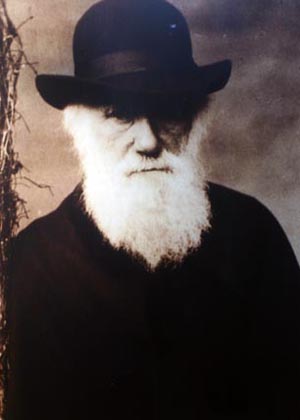
Was Charles Darwin a Career Coach?


“I have called this principle, by which each slight variation, if useful, is preserved, by the term Natural Selection.”
- Charles Darwin, The Origin of Species

Natural selection is the process by which those heritable traits that make it more likely for an organism to survive and successfully reproduce become more common in a population over successive generations. It is a key mechanism of evolution.

Natural selection and the idea of survival of the fittest are key elements of Charles Darwin’s theory of evolution. As a Career Coach, I often wonder if there are lessons that we can learn, by applying this theory to today’s current turbulent job market. After all, survival of the fittest and the notion of adapting over time to ensure survival has a direct correlation with job seekers competing against one other in a constricted job market for extremely scarce jobs.


For example, using Darwin’s lessons of natural evolution, we would understand that applying the same outdated job strategies like responding to job classifieds, searching job websites, relying on recruiters, etc. only lead to career extinction. Instead, we need to adapt and evolve in order to survive today’s constantly changing Twenty First Century global contract workplace. Job seeker survival of the fittest demands adaptive strategies such as:
• Customizing every resume and cover letter you send;
• Contacting the people we would report to in the Department of an organization we want to work in, to sell ourselves for a job they don’t even know they know they need to fill that we’d be perfect for;
• Forget elevator pitches! You need to brand yourself like a product using your USP/value proposition;
• Developing your very own personal marketing plan; and
• Creating a strategic networking plan to follow.

Americans will be expected to change jobs an average of 8-9 times during their careers. The pursuit of lifelong learning and transferrable skills makes sense as an adaptation strategy, for workers to deal with unexpected marketplace trends, developments and circumstances. In Darwin’s theory, species changed over time and space. In the wild, the importance of adaptation is self evident when chameleons change colors in order to blend into their surroundings to hunt more effectively. What can be said of workers that pursue new skills only to realize too late that the skills they learned are no longer needed in our post-Industrial, service and technology-based society?


Survival of the fittest has just as much relevance in the workplace as it does on the Serengeti. It means you HAVE to develop a strategy for dealing with abusive co-workers and bosses. You need to develop a survivalist mentality when you combat peers that attempt to sabotage you by taking credit for your work, blaming you for their failures, or slandering your reputation. It demands you align yourself with advocates to partner against stronger foes for protection, as is done in the wild.
The phrase “you scratch my back and I’ll scratch yours” has as much relevance in an office setting, as its counterpart “mutual symbiosis” does when a bird rides on a rhino to pick bugs off its back.

"Nature encourages no looseness, pardons no errors.”
- Ralph Waldo Emerson

Adapting to your natural environment is something that career changers learn how to do out of necessity. Elongated body parts to reach food sources are examples of how species change over time. An equivalent approach taken by a job seeker might entail making a career transition from an industry that is dying (printing, publishing, or manufacturing) to one that is growing (nursing, healthcare, Green initiatives.) As a society we make decisions that hurt our long-term survival, such as cutting down rain forests, polluting our water sources, and destroying our natural resources. The direct parallel of business owners outsourcing, off-shoring, and re-engineering jobs is scary.

An example of adaptation in the wild is when animal (wolf or lion) is ostracized by its pack to the point where it is forced to leave and become a “loner.” A strong connection can be drawn to disenfranchised career professionals that leave jobs working for an employer in search of freelance, contract, and consulting roles on a “go-at-it-alone” basis. In fact, research shows that one in four Americans are making this choice and the number is skyrocketing. Why is this happening? We can point to the death of the employee/employer contract as organizations have come to view employees as disposable assets.

Parallels exist between carnivores that learn to hunt in daylight or nightfall and job seekers that constantly pursue lifelong learning by taking adult education courses, pursuing professional certifications/accreditations, licenses, or taking specific skills training in your field of study or an industry you want to transition to.

A question that Charles Darwin would have certainly asked is: “Are we better off today as a society through the adaptive changes we went through since World War II?” Our educational systems are failing, a majority of the population has no faith in our politicians, entire industries are imploding, our actual unemployment rate has soared to 15-20%, the divorce rate surpassed 50%, our Middle Class is dwindling, our children are obese, we can’t afford to care for our elders or send our children to college, and many of our states are dangerously close to bankruptcy.

Darwin's theory of evolution fundamentally changed the direction of future scientific thought, though it was built on a growing body of thought that began to question prior ideas about the natural world . Perhaps it is time for us to rethink the approaches we take to our 21st Century American Society, or we may find ourselves devolving even further.

Monday, March 22, 2010

The Power of Being a "Contrarian" Business Owner.

Does it seem like more business people are acting like lemmings these days? They gladly follow the herd ANYWHERE, even if it means heading blindly off a cliff in pursuit of outdated business approaches.

It does make sense to follow others blindly. It’s comforting to stick with the familiar and there’s safety in numbers. Plus, we all have a fear of the unknown. It requires a TREMENDOUS amount of creativity, courage and energy to buck conventional “wisdom” in the pursuit of non-conformity. That explains why many business owners and professionals alike cling to outdated (and often harmful) ways of doing things, when confronted with a turbulent business climate like we find ourselves in now.

If we all sit around waiting for business to improve, who is going to lead us forward? Conformists can’t. Conducting business from a conformist approach at Lehman Brothers, General Motors, AIG, Bear Stearns, Merrill Lynch, AIG, Fannie Mae, Freddie Mac, etc. has led to widespread failures.

Our Nation requires contrarian leadership now more than ever. From Arizona to New Jersey, our states are becoming bankrupt. One in four Americans work in freelance, contract, and consulting jobs and the number will only climb higher. More than ten percent of Americans are unemployed (and many think the actual number is much higher.) The average American will be forced to change jobs 8-9 times in their career. Our cities are crumbling, and we’ve outsourced nearly all core competencies overseas. Entire industries like printing, advertising, publishing, retail, insurance, banking and financial services are imploding. Our two-party political system is dying. Now is NOT the time to accept the mediocrity that results from conformity.


Contrarians understand that the paradigm of work and the American enterprise itself has changed completely. We have seen the deterioration in the employer/employee contract. Businesses are faced with an extremely difficult lending environment, competition bombards us globally, and employees are accepted as disposable assets. It is times like these in which contrarian business owners LEAD with greatness.

Central to the contrarian business owner belief system is the fact that employees are critical to the success of an organization. They are not “disposable assets.” Contrarians NEVER subscribe to the myopic, short-term panacea of layoffs. While conformist business owners institute layoffs, contrarian employers invest even more in their EMPLOYEES in times like these. They throw away their job descriptions and find GREAT talent, without regard to positions. Contrarian business owners understand that you can ALWAYS find a place for truly talented people.

They don’t demand their people possess specific degrees or matriculate from certain academic institutions. Contrarians seek people who love to find solutions to problems, esp. problems that don’t even exist…yet. They thrive on teaching others, excel in chaotic environments that change constantly, don’t need constant hand-holding, and enjoy taking calculated risks when the potential reward is high.

You can spot a contrarian in an instant. They do crazy things like make all the Departments in their organization work together. Teamwork is most certainly NOT lip service to them, and it’s NOT relegated to a fancy picture in a frame in their lobby. Their organizations flourish with teamwork imbedded in everything they do. Managers of each Department have their objectives tied to other Departments. In the contrarian-run enterprise, the annual budgets of the Sales, Marketing, Product Development / R&D and Customer Care Teams are all developed and approved by each other. Heck, their budgets are tied to each other’s.

A contrarian is just as likely to hire circus folk, ex-convicts, military, High School drop-outs, retirees, and the physically/mentally challenged as they are an Ivy Leaguer. They pay more willingly, in order to recruit and hire the very best talent. They will even freeze the pay of their owners and senior management (or reduce it) in order to be able to afford to hire top talent at all ranks of the organization.

They go out of their way to make their employees feel special when they join their organization. They believe wholeheartedly in coaching/mentoring, training, recognizing, rewarding and promoting their people. A Contrarian does everything in their power to solicit ideas and feedback from their people ALL of the time. They even reward (and promote) their people for great ideas.

Contrarians understand deep down to the core of their Leader DNA that the PEOPLE closest to the work and their customers are in the BEST position to come up with new products and services. Their front-line employees know how to fix things and be more efficient. Contrarians seek ideas, input and direction from these employees constantly. Even better, they give their employees the tools, training, resources and AUTHORITY they need to succeed. Contrarians know how to get out of their people’s way, and WATCH THE MAGIC HAPPEN.

They “encourage” their people to fail GREATLY by taking huge calculated risks, and reward them with parties, gifts and raises for their “failures.” They cut back on their trade show expenses and take their employees on trips with those savings. Contrarians are crazy enough to set aside money to fund their people who are looking to start up their own businesses. The contrarian will go to great lengths to keep their talent, rather than let them leave to pursue their own business. They know it’s a great way to grow their own business by in effect acquiring a start up by staying “in-house.”

Being contrarian means increasing your marketing and advertising investments NOW. While competitors bury their heads in the sand, a contrarian boldly leverage these tools to achieve their goals. In a depressed market like we’re in now, they negotiate more favorable terms with advertisers, and KNOW their message will resonate more strongly when their competitors cut back their advertising. They march forward boldly in their contrarian confidence and send a message to clients, prospects, and markets that they are “in it” for the long haul.

In these turbulent times, only the business leaders that throw away the old ways will thrive. Contrarians understand that these times DEMAND we make emotional connections to employees, clients, partners, suppliers, and the media. For example, the Pareto Principal tells us all clients are not created equally. Your top 20% of your customers generate 80% of your revenue. Conversely, a relatively small number of customers demand a disproportionately large amount of your support team’s time and effort. A contrarian understands this, and cuts loose all those unprofitable clients who take time away from converting customers into repeat customers and repeat customers into apostles.

Contrarians don’t subscribe to today’s prevailing business “logic” that you need to take a wait and see approach. Contrarians relish the myriad challenges facing business owners today. Bold visionaries (contrarians) thrive on upheaval, and know how to turn chaos into opportunities and business profits.

Friday, February 26, 2010

Going For (Winter Olympic Gold) Success


Don't look now, but our U.S. Olympic team is making history at the XXI Winter Olympics in Vancouver, as it blows away the rest of the field in total medal count.


At present, they lead with 32 medals, 6 more than Germany and 13 more than Norway. Some performance highlights by the Americans in these Winter Games include:


  • Bode Miller wins his first gold ever and his third medal in these Games, after nearly walking away from the sport a year ago;
  • Apolo Ohno has won three medals in Vancouver and now owns more Winter Olympic medals (7) than any other U.S. Winter Olympian;
  • Shani Davis became the first skater in Olympic history to win the 1,000 meter distance event in two Olympics;
  • Our woman's hockey team wins silver; and
  • The U.S. wins SIX medals in one day, more than any other country EVER achieved (5).


QUESTION: Don’t our Olympic athletes know that this is NOT supposed to happen? Our athletes don’t typically perform very well at Winter Olympics.

What has brought about this dramatic change in THIS team's results? Perhaps our athletes collectively brought an entirely new attitude and approach to these Games and said: “Forget the past, let’s dare to be great!” There is a tremendously powerful lesson that we can all learn from our athletes, and apply to our own business and professional efforts?


THAT GOT ME TO THINKING: What if each of us took the approach of: “No more excuses, we are going to dare to be great?” What if we each decided that it can NO LONGER be acceptable to strive to maintain the status quo? What if we ALL took our heads out of the sand and stopped waiting for the current economic storm passes?


What if we all decided to REALLY invest in our people, and began taking calculated risks with higher reward potential? What if we bucked the trend of cutting back on spending, to invest in cutting edge creative and effective marketing and sales strategies? Let our competitors shrink from the public eye. Our efforts will come through even louder as our competitors remain silent. What if we decided once and for all to tear down the processes that we established long ago (even the ones that aren’t broken), in a concerted effort to achieve Gold medal, world-class customer care, business operations, sales efforts, marketing campaigns, new product offerings, and strategic approaches?


What if it wasn't good enough just to stop laying off employees but we started restructuring EVERY employees' job description to leverage ALL their core competencies? If we can learn anything from our American Olympians, it’s that success is not measured in wins and losses, or Gold, Silver, and Bronze. Just ask the heavily favored U.S. woman’s hockey team. A gold medal loss 2-0 to the Canadians was shocking, but they won Silver. There is no failure or shame in achieving such lofty success. After all in life's winding road, it’s not about the destination but the journey. What lessons can be take away from the past two years of Recession?


If anything our Olympians might quote Einstein for us – doing the same thing over and over again and expecting a different outcome is INSANITY. Apolo Ohno completely changed his skating style after winning medals at the last Olympics, and came up GOLDEN again. Only by daring to take a different approach can any of us hope to achieve Gold.


What do you think?

Wednesday, February 10, 2010

Should Undercover Boss Remain Hidden?

Show Preview

Have you seen Undercover Boss? It’s the latest reality TV show that follows CEOs of companies as they go undercover to investigate their businesses. The first episode aired after the Super Bowl and focused on Larry Hughes, President of Waste Management.

On one hand, I guess you could say “it’s about time.” Presidents of corporations are FINALLY getting out there and seeing what it’s like for their employees on the front line.
But a part of me sees this all as grotesque reality TV. Am I the only one who sees this as too little too late? We’ve suffered through decades of leadership deficit in Corporate America.

CEOs have failed miserably at communicating with their people. They have lost sight of what it’s like to be their employees or their customers, vendors, suppliers, partners, etc. They have alienated their workforce by initiating massive layoffs, instituting draconian employee compliance programs, and overworked, underpaid, undervalued, and underappreciated their people for so long that this new emphasis on hands-on caring CEO smells of grotesquely insincere gesture.


So, CEOs are going undercover to find out what it’s like to work in their companies? Here’s an idea. Why limit it to only ONE week out in the field? Why not take THREE MONTH tour with 2-week job rotations across all of the areas of their company? While they’re at t, spend time with their key customers, top suppliers, most valued partners, and other stakeholders.


The fact that this show was even produced is yet another slap in the face to the American worker. This is like dropping a coin in the tin cup of the homeless man on the corner, a momentary morality speed bump. If CEOs of American businesses really want to know what it’s like to be an employee in their organization, ASK THEM! Here’s a novel idea. Implement truly valuable programs for employees. Solicit direct feedback from workers by soliciting their ideas constantly.

Offer valuable incentives through reward and recognition programs, and match junior-level staff with more tenured workers in coaching/mentoring programs. Ant to REALLY show you are a CARING CEO? FREEZE all senior management bonuses, commit to NO MORE LAYTOFFS for several years. How about implementing cutting edge training & development programs for the employees?


Start by communicating with each and every employee. Use monthly town hall meetings to speak from the pulpit on the state of your business. Hold quarterly video conferences. Implement weekly “Breakfast with the Boss” talks, and send Monday morning emails from the CEO?

We all know there is a void in corporate leadership. Let’s not add insult to injury for the American worker by implying CEOs care. That ship sailed a LONG time ago. The landscape of American enterprise is littered with the fecal remnants of Adelphia, Enron, Global Crossing, Bear Stearns, GM, Lehman Brothers, AIG, etc.

If you want to get lost in mind-numbing reality TV, check out The Jersey Shore. Leave Undercover Boss.